2020 Covid-19 pandemic affected transportation and Airlines
The COVID-19 pandemic has had a significant impact on the air transportation system worldwide. This paper aims at analyzing the effect of the travel restriction measures implemented during the COVID-19 pandemic from a passenger perspective on the US air transportation system. Four metrics based on data generated by passengers and airlines on social media are proposed to measure how the travel restriction measures impacted the relation between passengers and airlines in close to real-time.
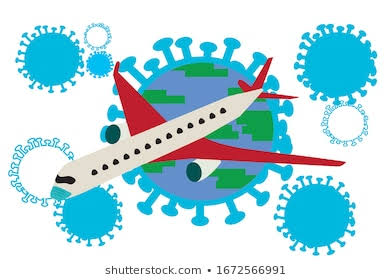
The proposed metrics indicate that each airline has reacted differently to the COVID-19 travel restriction measures from a passenger perspective, therefore they can be used by airlines and passengers to improve their decision making process. This report comes ahead of official data related to the same sequence of events, thereby showing the value of passenger-borne data in an industry where corporate priorities, institutional prudence, and passenger satisfaction come close together.
While all these previous diseases have had terrible and harmful effects on their own, these consequences occurred more directly at the local level. Despite of heavy travel ban restrictions as well as quarantine policies enforced by governments, the COVID-19 outbreak, which is believed to have started around January 2020, quickly spread to almost all countries worldwide. The number of infected cases reached one million in April 2020, surpassed 5.8 million in late May, and reached 23 million in August 2020, with the disease being related to more than 800,000 deaths worldwide (as of August 23rd, 2020).
Strict travel ban restrictions further amplified the substantial reduction of air passenger demand and resulted in a large number of flight cancellations. Although the total number of the COVID-19 infected cases is surging, a few countries seem to have achieved certain.
However, there is also a second side of the pandemic: it has led to an unmatched singularity in the global air transportation system. In what could be considered a highly uncoordinated, almost chaotic manner, countries have closed their borders, and people are reluctant/unable to travel due to country-specific lock-down measures.
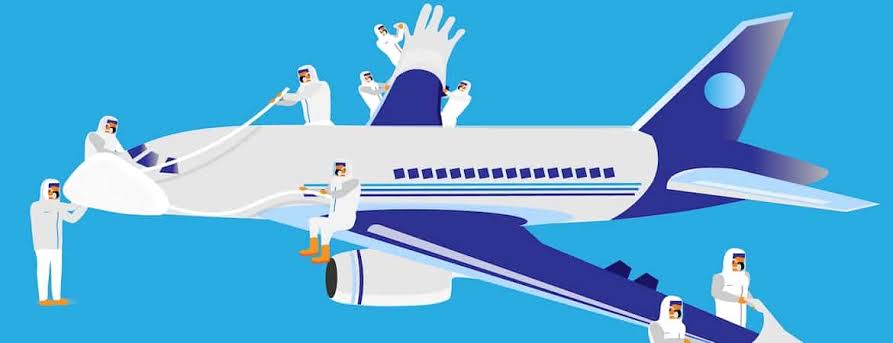
Accordingly, aviation is one of the industries that has been suffering most due to the consequences of the pandemic outbreak, despite probably being one of its largest initial drivers. In this study, we investigate the impact of COVID-19 on global air transportation at different scales, ranging from worldwide airport networks where airports are nodes and links between airports exist when direct flights exist, to international country networks where countries are contracted as nodes, and to domestic airport networks for representative countries/regions.
We focus on the spatial-temporal evolutionary dynamics of COVID-19 in air transportation networks. Our study provides a comprehensive empirical analysis on the impact of the COVID-19 pandemic on aviation from a complex system perspective using network science tools.
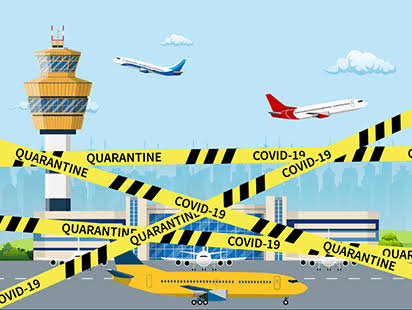
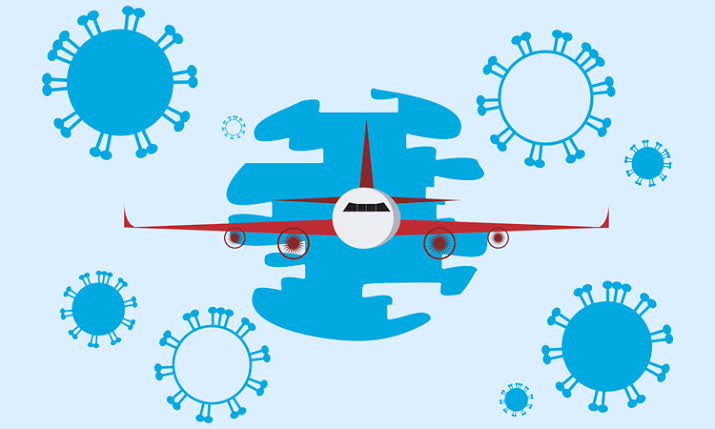
The analyses impacts of COVID-19 on daily public transport and Airlines in the time of 2020 covid-19 pandemic .
 2020 Affected travel transportation and Airlines